Letters from Lodi
An insightful and objective look at viticulture and winemaking from the Lodi
Appellation and the growers and vintners behind these crafts. Told from the
perspective of multi-award winning wine journalist, Randy Caparoso.

The art and zen of Lodi's old vines
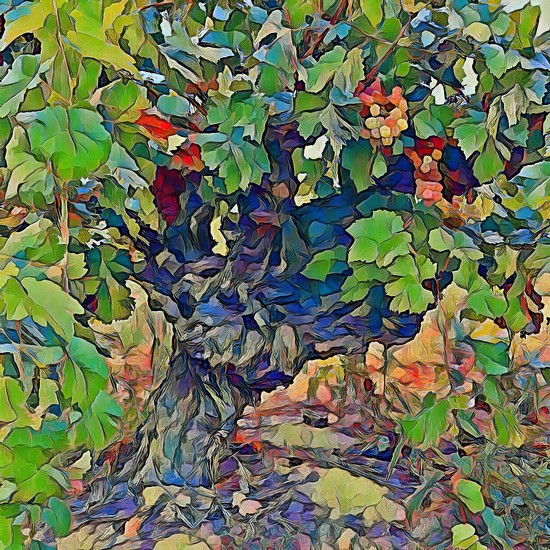
Alluring colors, like windows into a long heroic history, etched into this rendering of old vine Flame Tokay, grown along the Mokelumne River in Lodi's Clements Hills.
Nestled within the captivating landscapes of California's past lie a series of artistic windows into history, encapsulating the phenomenon of vineyards that have become more than just sprigs in the ground, but more like permanent elements of the earth itself.
Here in Lodi, we call that phenomenon "old vines," which are not like any ol' vineyards. More like birthplaces of dreams, cradles of creativity, or canvases for endless inspiration. (See our recent campaign, Save the Old)...
Continue » Sep 12, 2023 at 6:00 AM
 Permalink
The new, lighter, sharply terroir-driven styles of Lodi reds ideal for September sipping
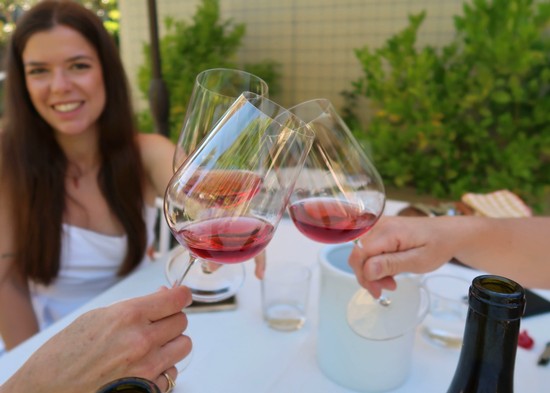
Toasting with a lighter style red wine—zestier in natural acidity, lower than 12% alcohol—crafted by Lorenza from classic Lodi grapes.
Thank you for your wine, California
Thank you for your sweet and bitter fruits
—Keith Richards/Mick Jagger (The Rolling Stones)
Strange and numerous fruits have been a thing in Lodi for longer than most people can remember. The region's most widely planted grape over most of the past century, for instance, was a variety called Flame Tokay. There isn't even a Wikipedia page for Flame Tokay, despite the fact that it was Flame Tokay that originally brought wealth to the City of Lodi during the turn of the last century.
In its wisdom, UC Davis' Foundation Plant Services does have a page on Flame Tokay, identifying its original moniker as a Vitis vinifera (i.e., belonging to the classic European family of wine grapes) as Ahmeur bou Ahmeur. That should tell you Lodi growers aren't crazy. Flame Tokay exists, even if you don't know it.
So do over 130 other grape varieties commercially grown and sold in Lodi, as we speak...
Continue » Sep 5, 2023 at 8:00 AM
Permalink
The first full week of the 2023 harvest in Lodi wine country
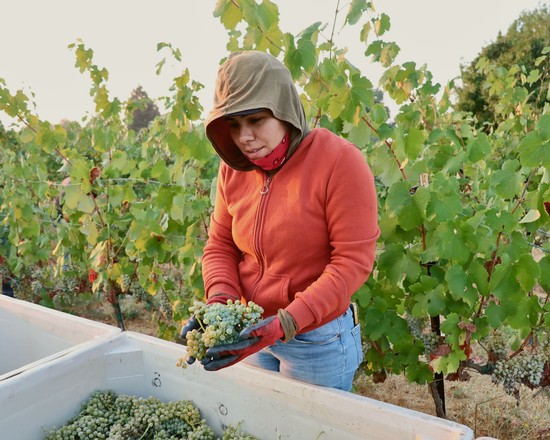
Fiano harvest, Fernow Ranch on the east side of the Mokelumne River-Lodi AVA.
Mother Nature can be cruel. Sometimes deadly; yet often, kind and benevolent.
If you take the word of vintners and growers who have picking grapes over the past week—pretty much the start of the 2023 harvest—lately Mother Nature has been very kind. The proof, we are seeing, is already in the pudding...
Continue » Sep 1, 2023 at 8:00 AM
Permalink
The flip side of alternative wines
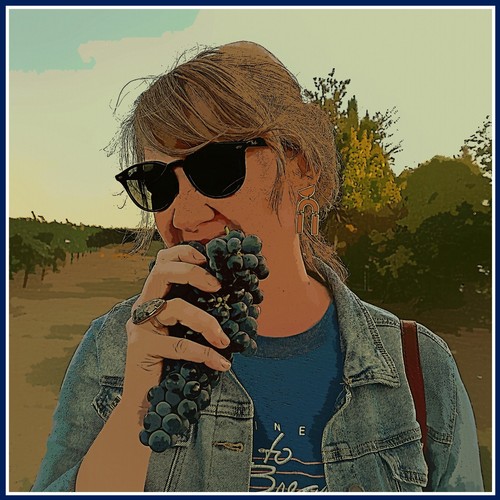
I love alternative style wines. They have kept my interest in wine perked up for the nearly 50 years that I've been working in wine-related industries. Otherwise, I'd be bored to tears.
Still, I have to admit: Many of the alternative wines of today are no more original or innovative than conventional wines. Over and over again, you hear the same words...
Continue » Aug 29, 2023 at 8:00 AM
Permalink
Newly opened Lodi Bowling features wines not just grown in Lodi, but also crafted to compliment high-umami foods

Lodi Bowling, Lounge & Bar
There's never any question how important grapes are to the Lodi region economy, history and culture. It's everywhere. Clusters or vines festoon public landmarks and permanent displays, including the emblem on the sides of City of Lodi police cars. The Lodi High School football team is called the Flames—after Flame Tokay, once the region's most widely planted grape—and their crosstown rival is Tokay High School.
Last week Lodi Bowling, located alongside Lodi's historic railroad tracks at W. Lockeford and N. Sacramento streets, held its soft opening, and is now revving up for full-fledged business. Its full name is Lodi Bowling, Lounge & Bar, as in full bar and menus, ranging from appetizers, fresh salads, hand kneaded pizzas, complete-plate entrées and made-to-order desserts...
Continue » Aug 23, 2023 at 1:00 PM
Permalink
A California first—Lodi's Bokisch Vineyards picks Spanish Cava grapes
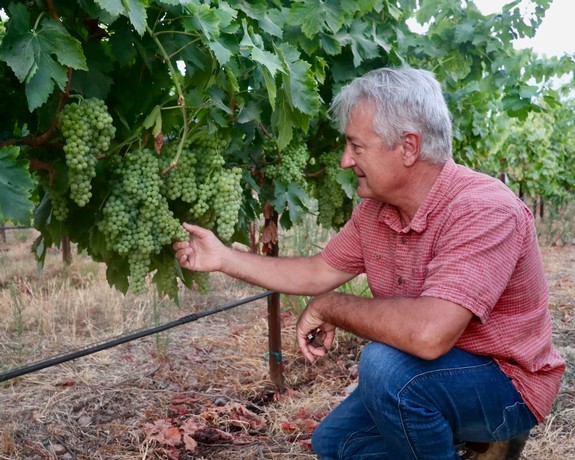
Bokisch Vineyards' Markus Bokisch with 2023 crop of Macabeu, a Spanish Cava grape now grown in Lodi's Clements Hills AVA.
Look out, world, California is almost ready to become a Cava producer!
California Cava, in actuality, is a misnomer, since Cava means "sparkling wine grown in Spain," and California is obviously not Spain.
Cava, in fact, is what is called a Denominación de Origen (DO), applicable only to sparkling wines made in one particular part of Spain in the vicinity of Catalonia's Penedès region, in the same way France's Champagne only comes from the Champagne appellation in France...
Continue » Aug 17, 2023 at 7:00 AM
Permalink
Explaining the Victor Book Club and emerging tastes for transparent wines
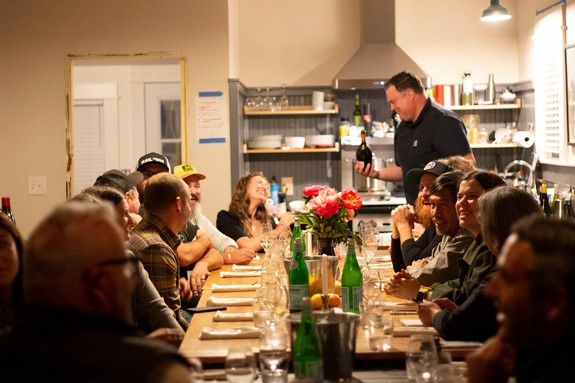
The mid-point of another Victor Book Club meeting of minds and wines, typically lasting a good six hours. R.H. Drexel.
The Lodi-based Victor Book Club has been around for less than five years, although during the first two years it wasn't called anything. It may not last much longer because, well, times change, people run out of steam or recalibrate, and all groups go through permutations. The Victor Book Club may even become mythical—something existing as a figment rather than actual phenomenon—and therefore, something that might as well be talked about now, while it is still happening.
Whatever its history or fate, this loose-knit group of industry wine professionals has managed to evolve into something of a subculture of surprising influence well beyond the scope of Lodi, a wine region which, ironically, is still looking for some semblance of its own place and identity within the global community of other wine industries, or in terms of wine appreciation around the world...
Continue » Aug 14, 2023 at 1:00 PM
Permalink
The delayed arrival of 2023's veraison signals a slightly later harvest
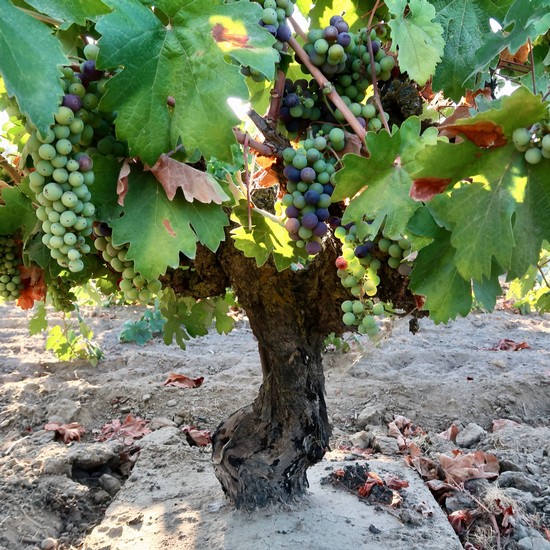
July 22, 2023: onset of veraison in old vine Grenache (planted in 1942) in Lodi's Mokelumne River appellation.
What happens during veraison
During one particularly long, bumpy drive up on Mendocino Ridge, Marchelle winemaker/owner Greg La Follette once broke the monotony by telling this joke: "Have you heard about the winemaker who died and went to heaven? I haven't either!"
But I will tell you one thing that gets winemakers' juices flowing: The annual period of veraison—from the French word, véraison—taking place in vineyards in the Northern Hemisphere around this time of year...
Continue » Aug 10, 2023 at 2:00 PM
Permalink
Lewis Grace's stable of acclaimed Silvaspoons Vineyards whites reflects the wisdom of one of Lodi's most talented growers
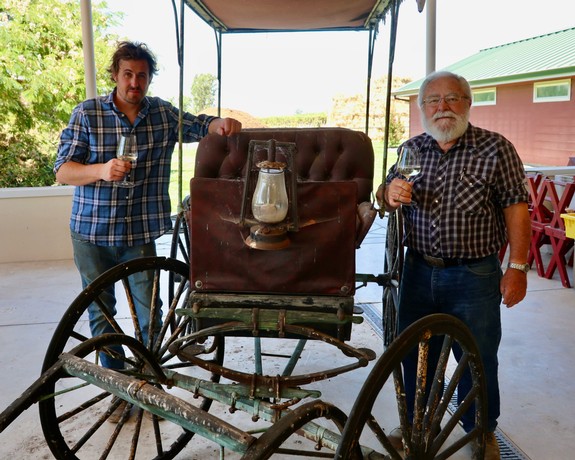
Lewis Grace Winery winemaker Trevor Grace (left) and Silvaspoons Vineyards owner/grower Ron Silva.
"Ah, notice that smell?" asked Ron Silva, owner/grower of Silvaspoons Vineyards in Lodi's Alta Mesa AVA, as we puttered around his ranch in his Kubota RTV. "That's the smell of money!" Mr. Silva was referring to the giant piles of compost he amasses, and lovingly nurtures, on his Sacramento County property, consisting of hayfields, grazing cattle and sheep, alongside 350 acres of vines.
Like most of Lodi's top vineyards, Silvaspoons is certified by LODI RULES for Sustainable Winegrowing. Not only does Mr. Silva fulfill the inch-thick book of requirements dictated by this farming system, he constantly aims to surpass them. "My next project," he tell us, "is to plant bee-friendly clover between the rows... and this year, I'll be folding in the biochar with the compost to get a more organically combusted biomass." For sustainable farmers, this shop talk is more like bedroom talk...
Continue » Aug 2, 2023 at 8:00 AM
Permalink
Tegan Passalacqua's latest Sandlands releases signal an abiding commitment to Lodi
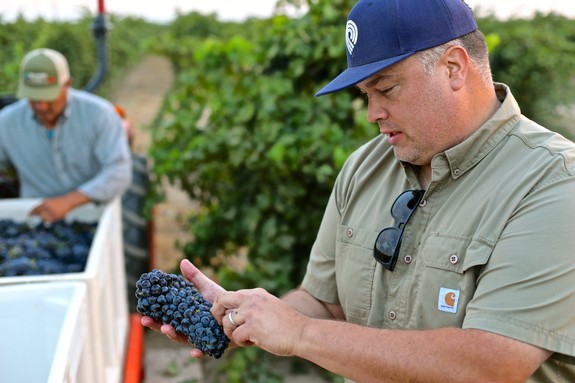
Tegan Passalacqua harvesting Zinfandel on the east side of Lodi's Mokelumne River AVA.
Last year (2022) marked Tegan Passalacqua's twentieth year with Turley Wine Cellars; most of that time spent as this iconic brand's director of winemaking. 2022 was also the thirteenth vintage of Passalacqua's personal brand, called Sandlands.
Both Sandlands and Turley are significant to the Lodi appellation because of the two-way-street relationship between the brands and grapes. Turley, to begin with, remains the nation's most prestigious producer of California Zinfandel and Petite Sirah, and the wines are sold in nearly every American market from Hawaii to New York...
Continue » Jul 31, 2023 at 2:00 PM
Permalink